DISCLAIMER: All rights reserved to the production companies and music labels that distributed and produced the music and performance respectively. I've only added the footage as a tribute for historical, entertainment, and creative purposes with no financial gain. Copyright infringement not intended.
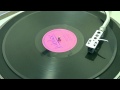
The Four Tunes Good News (Chariot's Comin') Jubilee 5174 B 1954
This is the flip side to "I Sold My Heart To The Junkman." This is the 2nd pressing that was released in 1954 by Jubilee, in the same year as the 1st pressing. A nice, minty, clean 78 for your enjoyment.
The 4 Tunes were probably the leading black Pop vocal group during the 1950s. Their origins can be traced back to a change of personnel in the Ink Spots. This requires a brief review of some events in the mid-40s. In June 1944, during an engagement in Chicago, Hoppy Jones became ill and the group had to finish a tour without him (Deek Watson filled in on the mandatory talking parts). This had unsuspected ramifications. Hoppy was the conciliatory father figure (nicknamed "the grand old man") of the Ink Spots. Now that he was missing, infighting between Bill Kenny and Deek Watson, which had formerly just smoldered, now flared up unchecked. Deek had been the leader of the group until their 1939 smash of "If I Didn't Care." Since then, Bill had firmly established himself in the forefront of the Ink Spots, pushing Deek further and further into the background. Hoppy returned in August, but by then, the damage had been done.
When he announced (in the January 1945 settlement of the lawsuits) that he would form a new group based "on a completely new idea," he simply changed their name to the "Brown Dots" (the name does sound somewhat familiar, doesn't it?). As it turned out, the "new idea" was to sound as much like the Ink Spots as possible. One real difference was that the Brown Dots relied more on harmony than the Ink Spots, who were more individualists. (Since the Brown Dots were also managed by Moe Gale, we know who the hands-down winner in this contest was.)
The polished style of the 4 Tunes was the product of their training, experience, dedication, and discipline. Their songs were carefully selected and arranged. Their first arranger was pianist Ralph Herman, who was the youngest member of Paul Whiteman's Orchestra. They also worked with Howard Biggs (whose most famous association was with the Ravens).
In mid-1953, they once again changed labels (since they weren't making any royalties from RCA). This time they went to Jerry Blaine's Jubilee label, where they achieved their greatest popularity. Their first Jubilee recording, "Marie," was released in September, and reached #2 on the R&B charts (#13 Pop). This Irving Berlin tune had been a #1 smash for Tommy Dorsey (Jack Leonard on vocal) back in 1937. ("Marie" was such a big hit that the purely R&B Dominoes and Larks were pushed to sing in the same kind of Pop mold.) Their next Jubilee release, "I Understand Just How You Feel" was an even bigger hit, climbing to #6 on the Pop charts (#7 R&B).
1954 saw two releases on the Kay-Ron label. These were old Manor cuts (although different takes). Two of them were backups to Savannah Churchill ("Savannah Sings The Blues" and "I Want To Be Loved"). The other two were "Just In Case You Change Your Mind" (which was actually by the Brown Dots) and "I Understand" (which was presumably released to confuse record buyers into thinking it was the same song as the current "I Understand Just How You Feel").
On Jubilee, the 4 Tunes were primarily a Pop group (although they did turn out something called "Rock N Roll Call"). Their output included "Don't Cry Darling," "L'amour, Toujours L'amour," "I Sold My Heart To The Junkman," "Time Out For Tears," "You Are My Love," "Far Away Places," "Dancing With Tears In My Eyes," "Sayonara," and "A Little On The Lonely Side."
The 4 Tunes appeared for a week at the Apollo Theater (beginning April 2, 1955), along with Red Prysock's Orchestra. They played both the black theater circuit and also many white clubs. When they were on a tour with Joni James, she asked Jimmie Nabbie to write a song for her. The result, "You Are My Love," was her big hit of 1955 (which the 4 Tunes covered).
In 1955, the 4 Tunes were booked into the Hacienda in Las Vegas on a handshake, and stayed for eight years. Other members, added at the time, were Smiley Hightower (guitar and bassist) and Eddie Williams (bassist; formerly of Johnny Moore's Three Blazers). Also, tenor Billy Wells (from Deek's second Brown Dots group) was hired so that each of the other members could go on vacation on a rotating basis.
Turntable used: Audio Technica AT-LP120 USB Direct Drive inputted straight into the sound card using the built-in pre-amp from the turntable.
Cartridge used: ATP-2XN using 78 3 mil needle.