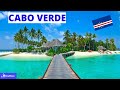
Top 10 Things About Cape Verde
Welcome to Displore and Thanks for watching, As you all know it is always a pleasure presenting to you interesting facts about the beautiful countries in Africa. In today’s video we are taking you to one of the most beautiful islands in Africa, Cape Verde and we are presenting to you some lesser known facts about this beautiful island country. Cape Verde officially the Republic of Cabo Verde, is an island country spanning an archipelago of 10 volcanic islands in the central Atlantic Ocean. It forms part of the Macaronesia ecoregion, along with the Azores, Canary Islands, Madeira, and the Savage Isles. Located 570km west of the Cape Verde Peninsula off the coast of Northwest Africa, the islands cover a combined area of 4,033km2. The Cape Verde archipelago was uninhabited until the 15th century, when Portuguese explorers discovered and colonized the islands, establishing the first European settlement in the tropics. Ideally located for the Atlantic slave trade, the islands grew prosperous throughout the 16th and 17th centuries, attracting merchants, privateers, and pirates. The end of transatlantic slavery in the 19th century led to economic decline and emigration. Cape Verde gradually recovered as an important commercial center and stopover for shipping routes. Incorporated as an overseas department of Portugal in 1951, the islands continued to campaign for independence, which was achieved in 1975.
If you are new here, welcome, be sure to subscribe and turn on notifications so you don’t miss any of our videos.
Cape Verde has grown into a great nation grossing in an annual GDP of $2.042 billion and with a GDP per capita of $3,651. They left their colonial days behind to become one of best democracies in Africa currently led by President Jorge Carlos Fonseca. Cape Verde is known for its beauty, football and economy but here are top 10 things you probably didn’t know about Cape Verde.
1. Island Santa Luzia is Uninhabited
The island of Santa Luzia is uninhabited, which means you can only visit from Calhau. Located on the east coast of Sao Vicente Island, you can rent a fishing boat for the day and make your way across this two-hour crossing. This island is celebrated for its beautiful white beaches and high sand dunes. Santa Luzia is the group’s smallest island and also uninhabited for almost all of the past two centuries. Today it’s a nature reserve, and home to a lizard found only here which makes tourist, explorers and geographers fascinated by the island.
2. Cape Verde Has Pledged to Run on 100% Renewable Energy by 2020
Cape Verde had pledged to supply the nation’s entire power needs through renewable energy by this year, 2020. Currently, the nation’s half a million populace have to import all their fossil fuels since Cape Verde has no mineral deposits and very little arable farmland, but it does get a lot of wind and sun. The government wants to capitalize on these natural resources. It hopes that the country will eventually no longer have to be dependent on imports for power. To this end, it has set up Project Cabeolicato deliver wind power across all populated islands. Currently, 30 wind turbines located on four islands supply about 25% of the electricity needed. This figure can peak at 35% of demand supplied. The aim is to stop using fossil fuels altogether, which will cut carbon emissions, as well as create jobs. 20% of Cape Verde nationals live in poverty, so the drive towards total renewable energy will help the national economy too.
3. Santiago Is Home to a 500-Year-Old Church
Cape Verde has the oldest colonial church in the tropics which is situated in CidadeVelha on Santiago Island. The 500-year