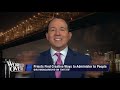
A powerful closing argument for criminal defense includes a clear theme, a systematic attack on reasonable doubt, a credibility takedown of key government witnesses, and a memorable call to action — delivered in a structure that can be adapted to any criminal trial. Michael Waddington and Timothy Bilecki break down what separates devastating closings from forgettable ones, drawing on 310 real closing argument snippets from dozens of jury trials. The right structure saves preparation time and dramatically increases persuasive impact.
**What Should a Criminal Defense Closing Argument Include?**
A strong criminal defense closing argument must address reasonable doubt and burden shifting, attack the lack of corroboration, confront forensic evidence and expert testimony, and challenge the credibility of every witness the prosecution relies on. Legendary trial lawyers including Johnnie Cochran, Gerry Spence, Jose Baez, and Mark O'Mara all built their most famous closings on these same structural pillars.
**How Do You Structure a Closing Argument in a Criminal Trial?**
The most effective closing argument structure opens with a theme tied to the facts, walks the jury through the weaknesses in the government's case, addresses legal defenses such as self-defense, mistake of fact, entrapment, and alibi, and closes with a vivid, memorable image or story. Charts and diagrams that visually illustrate concepts like proof beyond a reasonable doubt can anchor a jury's deliberations.
**Sample Closing Arguments: What Topics Should Be Covered?**
High-value argument topics include reasonable doubt and burden shifting, circumstantial evidence, coerced statements, biased or incompetent investigators, racial prejudice, online sex stings, sexual assault, violent crimes, and shutting down the prosecution's rebuttal. The book Kick-Ass Closings covers all of these with ready-to-adapt language drawn from real verdicts.
**Famous Closing Arguments Lawyers Study**
The closings in the O.J. Simpson, Casey Anthony, Michael Jackson, Scott Peterson, George Zimmerman, and Steven Avery trials are studied because each lawyer mastered the art of planting reasonable doubt while telling a compelling story. Analyzing these arguments reveals repeatable techniques that work across case types and jurisdictions.
**Where to Get Closing Argument Examples and Templates**
Kick-Ass Closings: A Guide to Giving the Best Closing Argument of Your Life, authored by Michael Waddington, is available at kickassclosings.com and on Amazon. It contains 310 closing argument snippets, dozens of quotes and parables, charts and diagrams, and a navigable table of contents organized by argument topic.
**FAQ**
**Q: Can closing argument templates really be adapted to different criminal trials?**
A: Yes — a well-built template covers universal elements (reasonable doubt, witness credibility, legal defenses) that every criminal trial shares, and the attorney fills in case-specific facts. Kick-Ass Closings provides both the template and hundreds of pre-written snippets designed to be modified for the facts at hand.
**Q: What makes a closing argument memorable to a jury?**
A: Jurors remember closings that use vivid stories or parables, visual aids that simplify complex legal concepts, and a single unifying theme repeated throughout. Quotes from legendary lawyers and real-trial examples show exactly how that is done.
**Q: How do I counter the prosecution's rebuttal argument?**
A: The most effective counter is to anticipate rebuttal arguments during your own closing and defuse them before the prosecutor stands up — a technique called "stealing thunder." Kick-Ass Closings devotes an entire section to shutting down rebuttal arguments with language proven in actual trials.
---
**About the Presenters**
Michael Waddington is a civilian criminal defense trial lawyer, a Fellow of the American Board of Criminal Lawyers, and the author of Kick-Ass Closings, the Pattern Cross-Examination series, and The Art of Trial Warfare. He is a former Army JAG and Trial Defense Service Senior Defense Counsel and an adjunct professor at FIU College of Law; his cases have been featured on CNN, 60 Minutes, BBC, and ABC News. Timothy Bilecki is a criminal defense trial lawyer whose work is also featured in the book. Together with Alexandra Gonzalez-Waddington, a criminal defense trial lawyer and former public defender, they represent the firm Gonzalez & Waddington, LLC, which defends service members and civilians in courts-martial and serious criminal cases worldwide. Learn more at ucmjdefense.com or kickassclosings.com.
Gonzalez & Waddington, LLC — Military Defense Lawyers | ucmjdefense.com | Call 1-800-921-8607 | Text 954-799-4019
#ClosingArguments #CriminalDefenseLawyer #TrialAdvocacy #KickAssClosings #ClosingArgumentTips #CriminalTrial #TrialLawyer #Courtroom