http://unserinfo.de/133 mehr Reisefilme und Infos: Hotel Fort Arabesque, Musik Inga G.
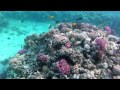
Das Rote Meer. An seinen Ufern erheben sich Wüstengebirge, in seinen Tiefen verbirgt es eine schillernde Vielfalt an Fischen und Korallen. Es ist ein relativ schmales (ca. 350km), 2240 km langes, bis 2600 m tiefes Nebenmeer des Indischen Ozeans zwischen Nordost-Afrika und der Arabischen Halbinsel. Auf Grund der topographischen Verbreitungsbarrieren und besonderen ökologischen Situation mit stark wechselnden Bedingungen entwickelte sich eine Spielwiese der Evolution. In das Rote Meer münden keine Flüsse. Ein Wasseraustausch findet im Wesentlichen mit dem Indischen Ozean über die Meerenge Bab el-Mandab statt. Zusammen mit der klimatisch bedingten hohen Wasserverdunstung erklärt dies den vergleichsweise hohen Salzgehalt des Meeres von bis zu vier Prozent. Außerdem ist das Wasser sehr warm - selbst im Winter sinkt seine Temperatur nur selten unter 22 Grad Celsius. Man findet Schildkröten, seltener den Weißspitzen-Hochseehai, Weißspitzen-Riffhai, Grauen Riffhai und Manta. Die raren Walhaie kommen meist nur in relativ kleinen Exemplaren von max. 5--6 m vor, Nicht vergessen sollte man in der Aufzählung Napoleon-Lippfische, Büffelkopf-Papageifische (beide werden zuweilen verwechselt), Doktor-, Kaiser-, Rotfeuer-, Kugel- und Igelfische, Blaupunktstachelrochen, Kraken und viele mehr. Muränen, teils außerordentlich große Exemplare, sieht man vor allem Ende August bis Anfang September (vermutlich die Laichzeit) ungewöhnlicherweise auch tagsüber in freiem Wasser dahinschlängeln. Häufig trifft man bei Bootsfahrten, in seltenen Glücksfällen beim Schnorcheln und Tauchen auf den Großen Tümmler und den Spinner-Delfin.
The Red Sea. On its shores rise desert mountains, in its depths, it hides a dazzling variety of fish and coral. It is a relatively small (about 350 km), 2240 km long, to 2600 m deep sea bordering the Indian Ocean between northeast Africa and the Arabian Peninsula. Due to the topographical distribution barriers and specific ecological situation with greatly varying conditions developed into a playground of evolution. In the Red Sea, no rivers flow. A water exchange occurs mainly with the Indian Ocean instead of the Straits of Bab el-Mandeb. Along with the climate-related high water evaporation, this explains the relatively high salinity of up to four percent. Moreover, the water is very warm - even in the winter the temperature rarely drops below 22 degrees Celsius. One can find turtles, the rare oceanic whitetip, whitetip reef shark, gray reef sharks and manta. The rare whale sharks are usually in relatively small specimens of max. 5 - 6 m ago, do not forget, you should in the enumeration napoleons, bump head parrot fish (both of which are sometimes confused), PhD, Kaiser, lionfish, ball and porcupine fish, blue spotted stingrays, octopus and many more. Morays, some extremely large ones, can be seen especially in late August to early September (probably the spawning season), unusually, then meander during the day in clear water. Frequently encountered with boat trips, in rare cases, luck snorkeling and diving on the bottlenose dolphin and the spinner dolphin.
http://unserinfo.de/133 film di viaggio più e info: Hotel Fort Arabesque, musica Inga G.
Il Mar Rosso. Sulle sue montagne si innalzano coste del deserto, nelle sue profondità, si nasconde una straordinaria varietà di pesci e coralli. Si tratta di un relativamente piccolo (circa 350 km), 2240 km di lunghezza, a 2600 m di profondità del mare al confine con l'Oceano Indiano tra il nord Africa e la penisola arabica. A causa delle barriere di distribuzione topografici e specifica situazione ecologica con condizioni fortemente variabili sviluppate in un parco giochi di evoluzione. Nel Mar Rosso, non fiumi. Uno scambio di acqua si verifica principalmente con l'Oceano Indiano al posto dello stretto di Bab el-Mandeb. Insieme con il clima legati evaporazione dell'acqua alta, questo spiega la salinità relativamente elevata fino al quattro per cento. Inoltre, l'acqua è molto calda - anche in inverno la temperatura raramente scende sotto i 22 gradi Celsius. Si possono trovare le tartarughe, il raro oceanico pinna bianca, squali pinna bianca, squali grigi e manta. Gli squali balena sono di solito rare in campioni relativamente piccoli di max. 5-6 m fa, non dimenticare, è necessario nei napoleoni enumerazione, sbattere pesci pappagallo testa (entrambi i quali sono a volte confusi), PhD, Kaiser, pesci leone, pesci palla e istrice, blu trigoni maculati, polpo e molti altri. Murene, alcuni tra quelli molto grandi, può essere visto soprattutto alla fine di agosto ai primi di settembre (probabilmente la stagione riproduttiva), insolitamente, poi si snodano nel corso della giornata in acqua libera. Spesso incontrato con gite in barca, in rari casi, lo snorkeling e le immersioni fortuna sul tursiope e il delfino filatore.